-
Curated by Alberto Salvadori
Opening 11.06.2026
12.06.2026
24.07.2026
Fondazione ICA Milano presents O Estrangeiro. 35°30’54” N, 12°34’48” E, a solo exhibition by Arjan Martins, the artist and one of the most significant voices on the contem- porary international art scene, curated by Alberto Salvadori.
The exhibition introduces to Italy, for the first time, a significant selection of the artist’s recent works, bringing together a body of pain- tings that stage a poetic and political crossing of the Atlantic as a space of memory, conflict, and transformation.
Arjan Martins’(Rio de Janeiro, 1960) artistic practice develops through a layered reflection on the African diaspora and on the routes that have shaped, over time, the forced circulation of bodies, images, and identities. In his pain- tings, the sea is never a backdrop: it is a living archive, a site where histories are deposited and reactivated, a field crossed by trajectories that continue to produce effects in the present. As clearly emerges from his practice, the artist transforms “voices and sounds drawn from history books, written words, and spoken words” into images that take the form of imaginary and collective portraits.
The exhibition title refers to the geographical coordinates of the island of Lampedusa, an emblematic node of contemporary Mediterranean migration. The figure of the “foreigner” evoked by the title thus becomes a condition that transcends geography in order to explore themes of belonging, identity, and distance. This reference is particularly significant in light of the history of Brazil, the artist’s country of origin, whose identity was formed through the layering of Indigenous, African, and European cultures and which continues to confront profound social and political tensions.
The works on display articulate a pictorial language in which cartography and narrative, symbol and figure coexist. Vessels, navigational instruments, bodies, and landscapes are arranged across the canvas as elements of an unstable geography, where time is not linear but circular. The images seem to emerge from an anachronistic dimension: they do not document the past but reactivate it, placing history and contemporaneity in tension with one another.
As the artist himself states, his intention is to transform voices and sounds from history books, written words, and spoken accounts into images. His practice is also grounded in the use of historical photographs, often con- nected to experiences of migration, which are reworked into compositions where document and imagination coexist. The result is a series of individual and collective portraits that con- vey the complexity of diasporic experiences and cultural stratifications.
The representation of bodies occupies a central role in Martins ’practice: the figures he paints never appear isolated but are em- bedded within a network of relationships and affiliations that traverse different times and geographies. Through a pictorial language characterized by intense colors and a strong attention to the symbolic construction of the image, the artist interweaves cultural elements, iconographies, and cartographies, keeping Africa in constant dialogue with contemporary Brazil.
Alongside the historical and political dimension, a more intimate component also emerges, whereby the works seem to measure a distance that is emotional as well: the distance separating an individual from the places of their memory, their origins, or their sense of belonging. The paintings thus become sensitive instruments capable of registering the relationship between uprootedness and rootedness, absence and presence, con-structing a genuine affective geography.
Several works also feature symbolic elements that directly reference the history of exploration and colonial economies. This is the case, for example, with a gold ship-shaped pendant that recalls the role of oceanic routes and the enterprises that led to the conquest of the Americas.
This dimension extends to the materials em- ployed by the artist: in works such as O Estrangeiro III, the support itself becomes an integral part of the narrative, preserving traces and sedimentations of memory.
The exhibition at Fondazione ICA Milano thus offers a reflection on the present through a painting practice capable of bringing together history, imagination, and lived experience. Arjan Martins’ works create a space for engagement with a shared and still unresolved memory, questioning the role of images in the construction of contemporary identities and the narratives that accompany them.
Arjan Martins previously collaborated with Fondazione ICA Milano in 2019 on the group exhibition Apologia della Storia, curated by Alberto Salvadori and Luigi Fassi, the institution’s inaugural exhibition project, conceived as a crossroads for encounters and cultural exchange; and again in 2020, within the project conceived by Fondazione ICA Milano for the Massimo De Carlo Virtual Space, dedicated to one of the most significant reflections to emerge during the pandemic period.
Fondazione ICA Milano thanks Banca Intesa Sanpaolo, the Foundation’s official sponsor, Valsoia and Enel for their support of the institutional program and activities.
ARJAN MARTINS
Arjan Martins (1960) lives and works in Rio de Janeiro. His research focuses on themes of migration, diaspora, and colonial legacies across Afro-Atlantic territories. His works, often constructed as symbolic cartographies, establish connections between historical and contempora ry elements, intertwining images of travel, navigational instruments, and representations of the everyday lives of Afro-descendant communities.
His work has been presented at major interna- tional institutions and included in exhibitions such as When We See Us: A Century of Black Figuration in Painting at the Kunstmuseum Basel, the 34th São Paulo Biennial, and at venues including the Museo Madre, the Centre Pompidou, and the Pérez Art Museum Miami. His works are held in numerous major public and private international collections.
Arjan Martins previously collaborated with Fondazione ICA Milano in 2019 as part of the group exhibition Apologia della Storia, curated by Alberto Salvadori and Luigi Fassi, the institution’s inaugural exhibition project, and again in 2020 within the framework of the project conceived by Fondazione ICA Milano for the Massimo De Carlo Virtual Space, dedicated to one of the most significant reflections to emerge during the pandemic period.
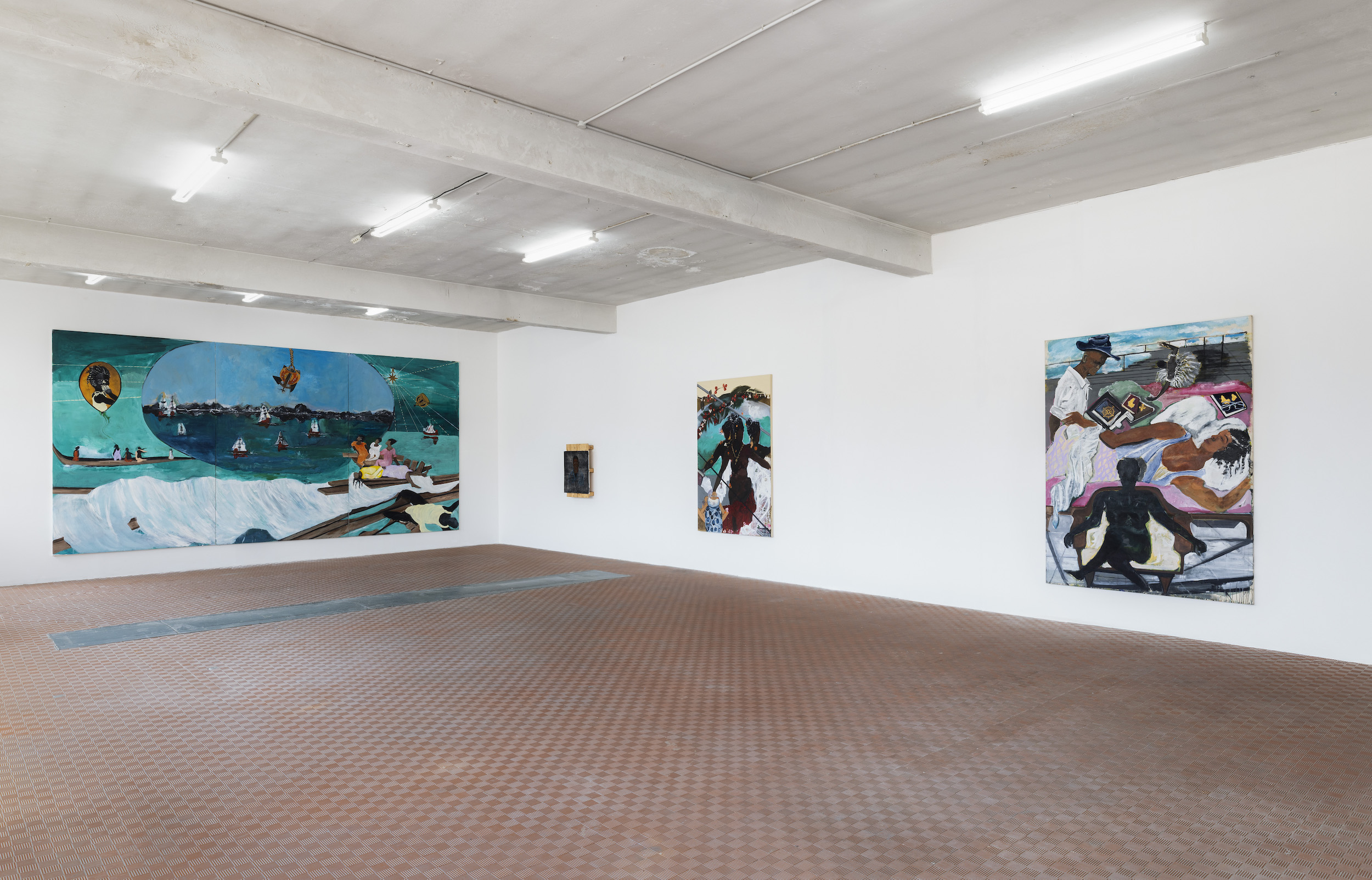
Installation View, “Arjan Martins. O Estrangeiro. 35º30'54" N, 12º34’48” E”, curated by Alberto Salvadori. Courtesy Fondazione ICA Milano and the artist. Ph. credits: Andrea Rossetti.
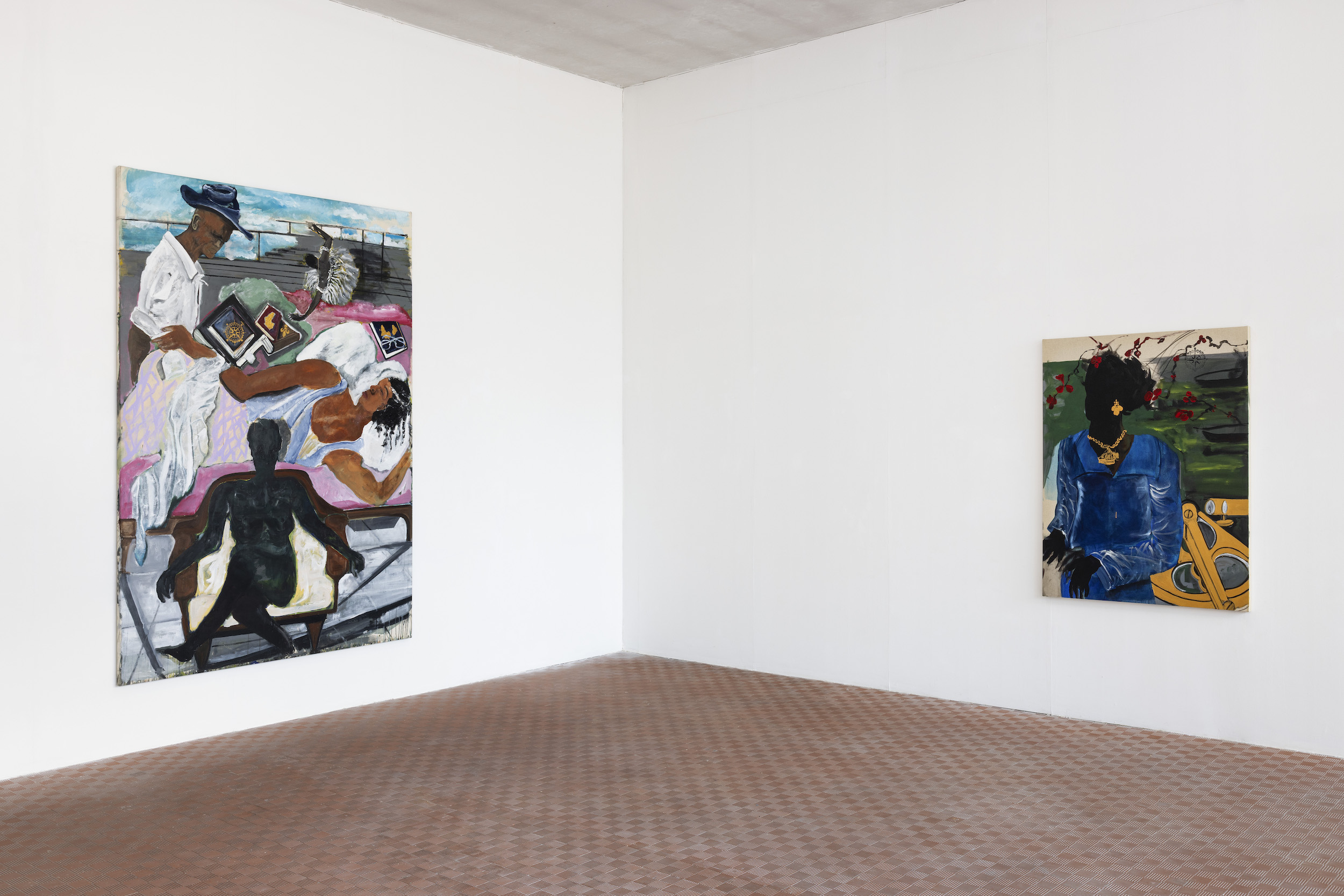
Installation View, “Arjan Martins. O Estrangeiro. 35º30'54" N, 12º34’48” E”, curated by Alberto Salvadori. Courtesy Fondazione ICA Milano and the artist. Ph. credits: Andrea Rossetti.
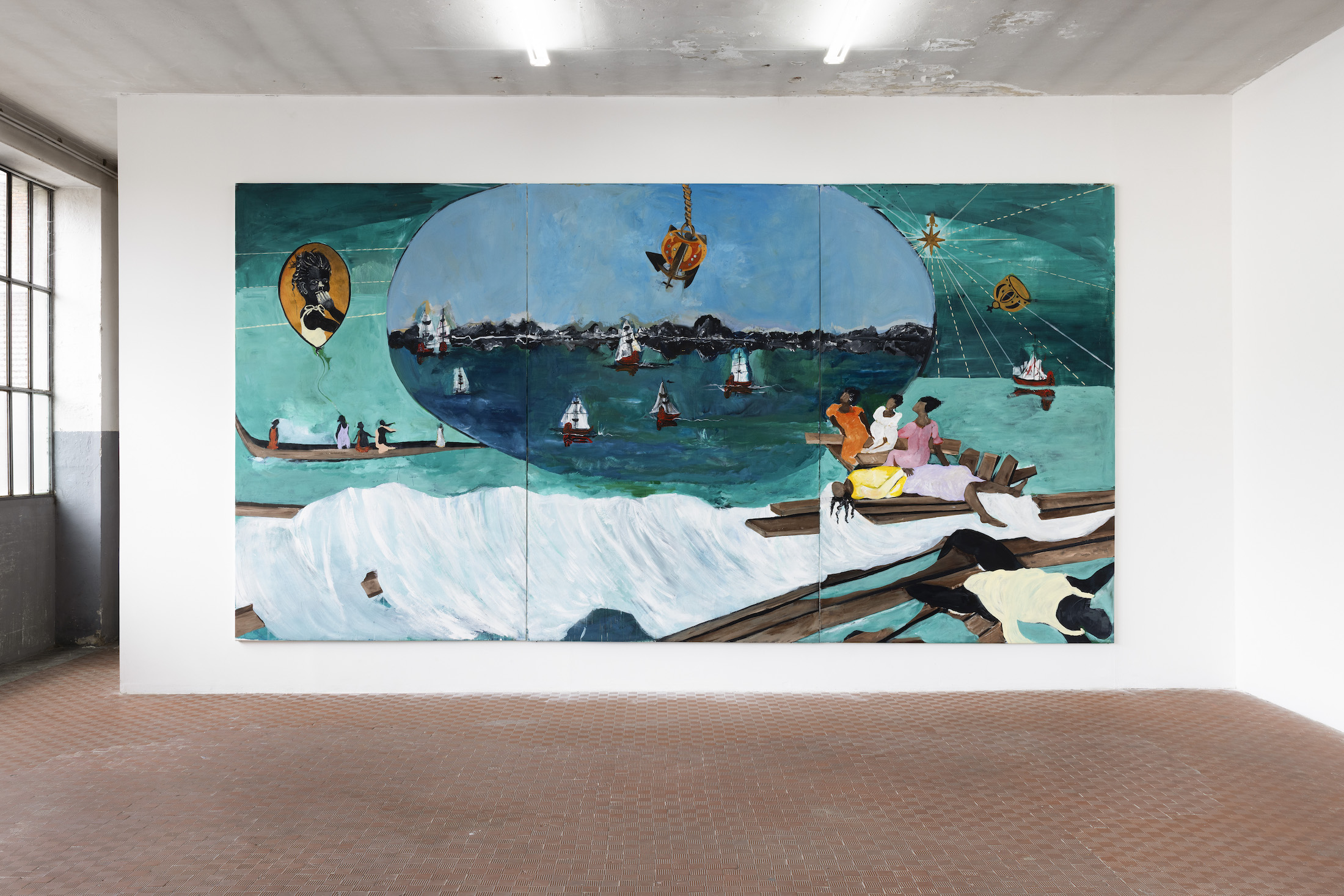
Installation View, “Arjan Martins. O Estrangeiro. 35º30'54" N, 12º34’48” E”, curated by Alberto Salvadori. Courtesy Fondazione ICA Milano and the artist. Ph. credits: Andrea Rossetti.
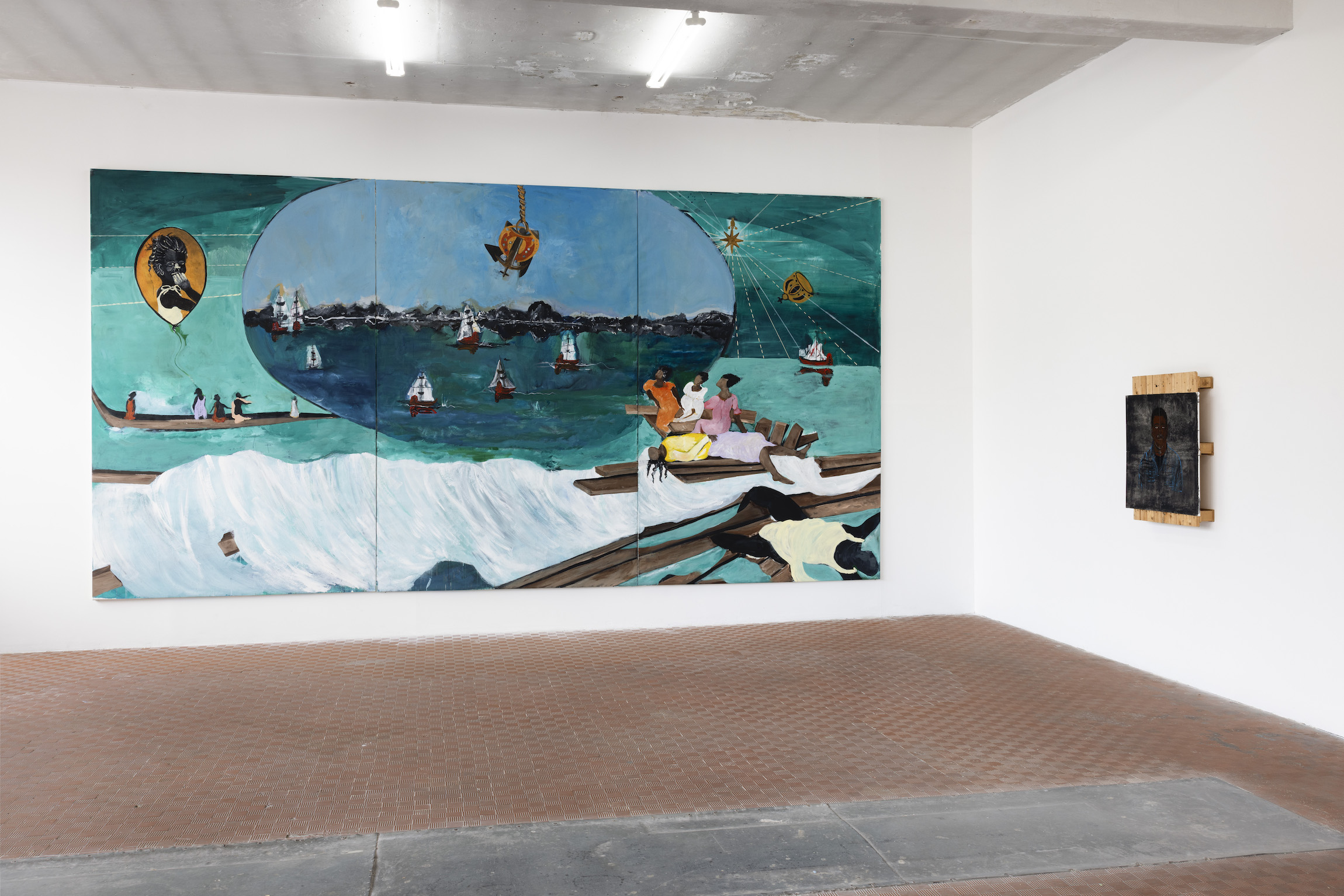
Installation View, “Arjan Martins. O Estrangeiro. 35º30'54" N, 12º34’48” E”, curated by Alberto Salvadori. Courtesy Fondazione ICA Milano and the artist. Ph. credits: Andrea Rossetti.
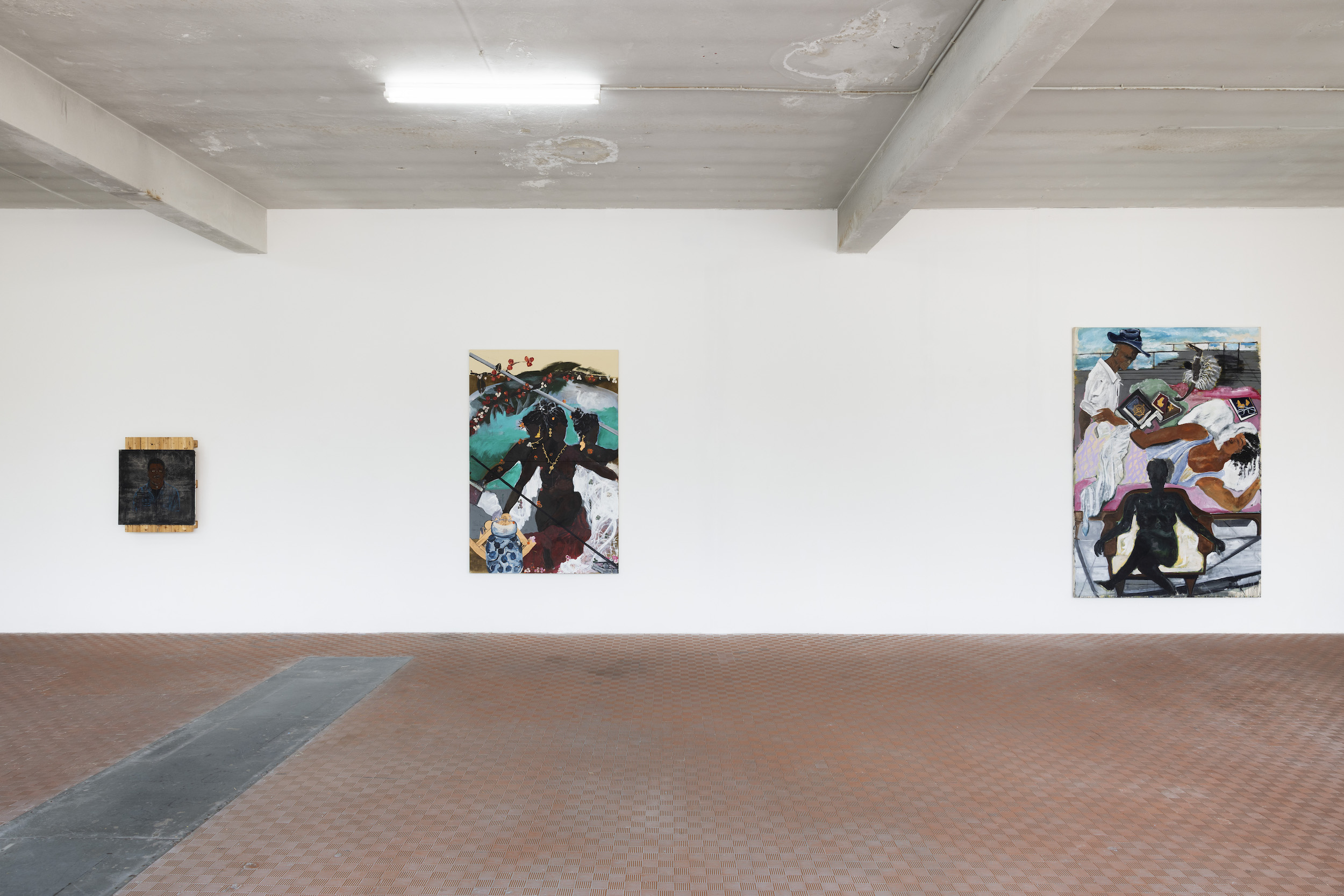
Installation View, “Arjan Martins. O Estrangeiro. 35º30'54" N, 12º34’48” E”, curated by Alberto Salvadori. Courtesy Fondazione ICA Milano and the artist. Ph. credits: Andrea Rossetti.